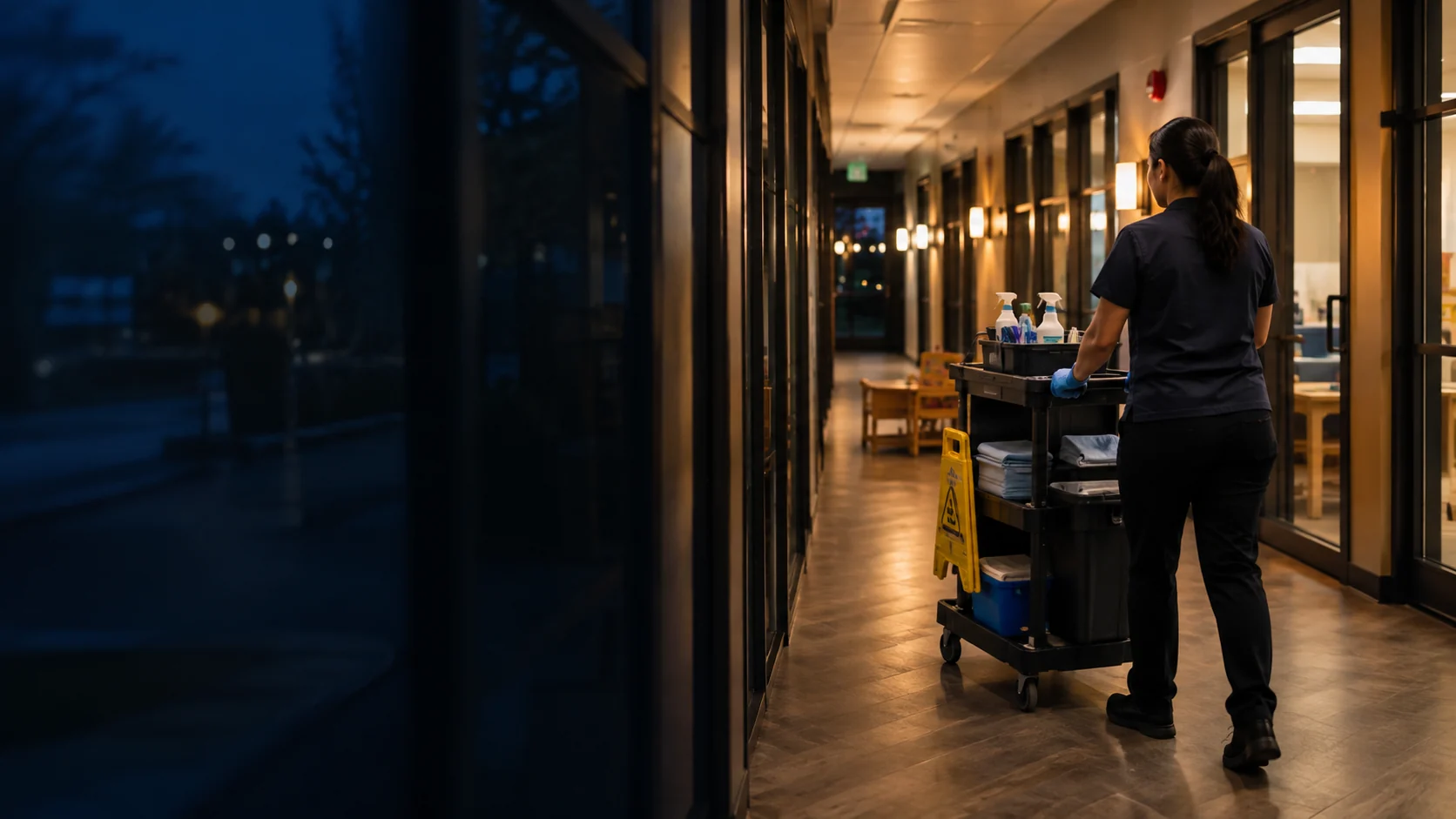
The right reference for a cleaning concern is the agreement behind the visit. Define the rooms and tasks so the business contact and provider can discuss what happened and what needs attention.
Defined tasksAgreed frequencyClear responsibilities
THE WAY YOUR PROPERTY WORKS
Good details make
all the difference.
The right reference for a cleaning concern is the agreement behind the visit. Define the rooms and tasks so the business contact and provider can discuss what happened and what needs attention.
01
Write the scope in terms people recognize
Use the property’s actual room names, entrances and work areas. Include the surfaces and frequency so a broad phrase such as office cleaning becomes a useful list.
02
Choose the areas to review together
Identify the visible surfaces and fixtures relevant to the service. The website’s animated journey offers examples to discuss, rather than a record of completed work at a customer property.
03
Make a concern specific enough to act on
A short description of the location and task helps the next conversation. Note whether the room was occupied, locked or blocked when the provider attended.
Address and room or surface
Visit date and agreed task
What was observed or unavailable
Contact for the follow-up decision
04
Keep reporting appropriate to the workplace
Agree how concerns are shared and who receives them. Avoid including private records, visible screens, staff details or customer information in general reports or photographs.
05
Revisit the plan when the business changes
New opening hours, room layouts or patterns of use may call for a different task list. Review the scope with the provider and keep a current version available to the responsible contacts. Record relevant surface-care directions when the scope changes. For proposed products, WorkSafeBC’s guidance explains the information available through labels and safety data sheets.